NORTH DUNDAS – Municipal elections are more important than many people think. Of all the level of government we deal with, the municipal level is the one in which we can have the most direct impact and interaction.
With that in mind, The Record, to introduce the certified candidates to their constituents as clearly and as equitably as possible chose to send each candidate, regardless of whether they were running for Mayor, Deputy Mayor, or Councillor a list of three questions. Each candidate was allowed a total of 200 words to answer each question, and their answers would be published as received, with the only editing being for spelling and grammar, and length, should they exceed 200 words (word 201onward would not be published.)
Candidates were advised that they were under no obligation to respond and that we would make no comment if they did, or they did not do so. A strong belief in Journalism is that it is not a journalist’s job to tell the public what to think, but what to think about. We each make our own, hopefully informed, decisions.
Here are the three questions, followed by the responses we received from each candidate. We will list North Dundas first. South Dundas, North Stormont, South Stormont and Russell will be included in the upcoming week’s papers.
Candidate Questions:
- What do you believe should be the top priorities for the municipality over the next four years, and what would you like to see council accomplish during your term in office?
- Municipalities face increasing pressure to provide services and maintain infrastructure while keeping taxes and other costs affordable for residents. How would you approach balancing these competing demands, and what factors would guide your decisions?
- What do you believe are the two most important issues or opportunities facing our community that deserve greater attention from municipal council, and what would you propose doing about them?
Theresa Bergeron, Candidate for Mayor
Question 1: Our top priorities need to be securing funding for infrastructure and managing growth responsibly. North Dundas needs significant investment in water, sewer and roads, and revenues from growth alone will not cover those costs.
We have recently brought in lobbying professionals who have the time and expertise to identify provincial and federal funding programs and help us pursue those opportunities. These programs are constantly changing, and we need to make sure North Dundas is well positioned when funding becomes available.
Growth is coming, and the next Council will have an important job overseeing it. I want to see growth happen at a reasonable pace, with good planning behind it and the infrastructure and services needed to support it.
Question 2: There will never be enough money to do everything at once, especially with the increases we have seen in costs. My approach is to look at need, safety, regulations, available funding and what will give taxpayers the best value.
Roads are a good example. With a limited roads budget, we consider traffic volumes when deciding where money should be spent. But we also can’t allow a lower-traffic road to fall below provincial minimum standards. If a road is approaching that minimum, it must become a priority regardless of how much traffic it carries.
We also need to keep pursuing provincial and federal funding wherever possible. Our staff have always looked for those opportunities, but researching programs and completing extensive applications takes considerable time. Bringing in specialized help gives us another tool to pursue funding without adding that workload to municipal staff.
Question 3: Two areas I think deserve more attention are our recreational facilities and services for families and seniors.
Our two arenas are over 50 years old, and both need roof replacements at a cost of well over $1 million each. This work has been postponed for years because our small community simply can’t afford it. We are applying for funding, but I think we should also explore other options. Could a large corporation help fund the work in exchange for putting their name on the building?
We also desperately need more daycare services. We have a building newly zoned for daycare. Could we attract an organization such as the YMCA to operate it?
Our seniors’ complex is growing from 250 to 500 units, and the new French Catholic school will be directly across the street. The school is open to partnerships involving its gymnasium. Could we work with an organization to offer seniors’ programs there after school or on weekends?
I want Council to keep looking for creative, win-win opportunities to provide the services our community needs without putting the full cost on taxpayers.
Tony Fraser, Candidate for Mayor
Question 1: Over the next four years, we need to build on the progress North Dundas has made during the past eight years. Our priorities must be reliable infrastructure, responsible growth, good municipal services and keeping our community a place to live, work and raise a family.
We need to continue our work on water and wastewater systems, roads, bridges, pools, arenas and parks. That means maintaining what we have, completing improvements and preparing our infrastructure to support future growth.
We need to establish a township-wide approach to replacing aging park equipment throughout North Dundas. Future improvements should be prioritized according to the condition of the equipment, its use and the needs of each community.
We must continue encouraging new housing and investment, supporting our existing businesses and expanding our tax base. I have spent eight years building relationships and speaking directly with Provincial ministers about North Dundas. We have received grants; I will continue advocating for our priorities and pursuing grant opportunities, so the full cost of major projects does not fall on local taxpayers.
My goal is practical, steady progress that strengthens our villages, hamlets and rural areas and ensures every part of North Dundas has opportunities to succeed.
Question 2: Council must maintain the services and infrastructure residents rely on without placing an unreasonable burden on taxpayers. That requires that we continue to plan, setting priorities and recognizing that not every project can be completed at once.
Decisions must be guided by the condition of the infrastructure, the urgency of the work, the number of residents served, the long-term cost and the Township’s overall financial position. Delaying necessary work can result in taxpayers facing a much larger bill later.
Some projects can be phased in, while others may need to proceed when grant funding becomes available. Ontario and Canada have committed a combined $8.8 billion over 10 years for housing-enabling infrastructure across Ontario. North Dundas needs experienced leadership at the table, making sure our needs are understood and advocating for our fair share of that funding.
I have spoken directly with ministers throughout my time as Mayor, and I will continue building those relationships and presenting strong, well-supported applications.
We must also encourage responsible growth. New homes and businesses expand our tax base, help share municipal costs and allow us to maintain services without relying solely on existing taxpayers.
Question 3: The first issue and opportunity are water security and the infrastructure needed for our future. The immediate challenge is securing provincial funding to match the federal government’s $8.4-million commitment to take advantage of water available from our aquifer wellfield.
Longer term, a pipeline from the St. Lawrence River would be a major, multi-year undertaking that could not be built in one term. I have initiated discussions with surrounding municipalities that could also benefit. A regional approach would strengthen our case for provincial and federal support and bring greater attention to this need. I will continue using the relationships I have built with ministers to advocate for North Dundas.
The second priority is responsible growth that broadens our tax base while respecting our agricultural community. We need housing for families, workers and seniors, along with commercial and industrial investment. We will continue encouraging appropriate development across North Dundas.
Our farming community will continue to have a voice in decisions affecting agriculture. Farmers are the stewards and experts of their land, carrying on the work of generations who helped build North Dundas. Growth must welcome new residents and investment while protecting the productive farmland and rural character central to our community.
John Thompson, Candidate for Deputy Mayor
Question 1: Top priorities for the municipality over the next 4 years should start with a cohesive and transparent council that can work together on the important issues that the township will face over the next 4 years. Working together is KEY for the success of our township!
I would like to see council address the following:
- A transparent and responsible fiscal budget
- Create a long-term plan for our future water needs involving all commercial and residential users
- Take a look at our potential growth and coordinate it accordingly with our infrastructure plans and needs
- Prepare a roads plan and schedule and make it accessible to the residents
- Take a hard look at our facilities and access current use and condition to make informed decisions going forward.
- Respectfully and actively listen to the needs and concerns of our residents and the agricultural sector as it evolves
Question 2: All municipalities are facing the same issues of providing an ever-growing list of services and infrastructure needed and desired by the residents. While doing everything would be nice, it is not always the most cost-effective solution and can lead to serious tax hikes for citizens if not handled correctly. It is a delicate balancing act to make the right choices between the needs and wants for our community. In my opinion, we need to look at what we already have, determine the life expectancy, maintenance costs and usage of existing facilities to make a correct decision on whether a replacement or expansion is warranted based on present and future needs. Likewise for services, factors such as location, cost and need would need to be examined to make an informed decision.
Question 3: While speaking with residents in the township, there are many issues that are concerning residents. Two that stand out as the most important are financial accountability and infrastructure needs.
With rising costs, the residents of North Dundas are justifiably concerned about taxes and where their tax dollars are being spent. It is the responsibility of Council to spend these dollars wisely and be accountable! Fiscal responsibility is an important goal for any member of Council to aspire to.
The second issue I’m hearing a lot about is Infrastructure and with it concerns about water, sewer, roads, and adequate internet service. To ensure growth in the residential, commercial and agricultural sectors, Council members must make sure these concerns and others are listened to and addressed in planning for future growth and expansion. For example, in the case of roads, Council must ensure a stable road system throughout the township. This system needs to monitor and maintain safe travel ways while planning for future growth and expansion. In the planning stages, it needs to be remembered that North Dundas is a farming community, and roads in our Township need to accommodate new and larger farming equipment.
Jordan Hodge candidate for Councillor
Question 1: My top priority is to right the ship by establishing a transparent, 20-year infrastructure and fiscal roadmap. We can no longer rely on short-term, reactive decision-making. The band-aid approach is a major reason why we now face massive infrastructure deficits and unsustainable tax spikes just to maintain the status quo.
Over the next four years, I want to see council shift completely to long-range planning. This means building a 20-year asset blueprint that maps out predictable, phased funding for our aging arena roofs, drainage systems, and road networks across every corner of the township. Every taxpayer deserves to see progress.
To accomplish this, we must first restore public trust and respect on Council. I will champion open-door governance, ensuring major contract details, infrastructure liabilities, and draft budgets are shared as transparently as possible with residents well before votes occur. By the end of this term, success will mean leaving behind a strict, long-term playbook that removes guesswork from town hall. North Dundas deserves a council that looks decades ahead, treats taxpayers like stakeholders, and plans for the next generation, not just the next election.
Question 2: With Ontario law strictly forbidding municipal deficits, council faces a harsh reality; the looming draft budget demands a double-digit tax increase just to maintain the status quo. Meanwhile, our infrastructure crumbles. Asking residents to pay more every year for fewer services is entirely unsustainable.
A long-time resident recently told me that since moving here in 1992, his taxes have jumped nearly 400%, and all he has to show for it is one less garbage bag allowed at the curb. He is entirely right. This is the result of years of short-term, reactive decision-making.
My approach will be one of intense fiscal scrutiny and infrastructure triage. Guided strictly by public safety and economic necessity, we must use our Asset Management Plan to prioritize vital projects like critical roads, drainage, and water systems. While pausing non-essential capital spending.
We must balance the books by looking inward, not just opening taxpayers’ wallets. I will advocate for operational modernization, removing any administrative overhead, and reviewing vacant roles through natural attrition. Concurrently, our alliance will aggressively lobby federal and provincial partners for grants to ensure the burden of updating North Dundas doesn’t fall squarely on local property owners.
Question 3: The first critical issue is recreational asset integrity and contract accountability. Our two local arenas are the heart of our community, yet both suffer from leaking roofs. We must fix these hubs, but structural repairs must be backed by absolute financial protection. I propose an overhaul of our procurement policies to implement strict, milestone-based contracts. We must ensure Taxpayer dollars never be released to outside contractors until work is verified on-site. I will also push for an independent audit of capital expenditures to ensure total transparency and protect public funds from unfulfilled contracts.
The second issue is road restoration and agricultural drainage. North Dundas runs on agriculture, yet our chip-and-tar roads are horrific, potentially endangering drivers and damaging vehicles. Concurrently, lagging municipal drains threaten crop yields. I propose a rolling five-year rural road stabilization plan prioritizing superior base preparation. Simultaneously streamlining the drainage, and clearance process, we protect our agricultural economy and prevent standing water from undermining and washing out our road foundations.
Matthew Uhrig Candidate for Councillor
Question 1: Over the next four years, North Dundas must focus on managing growth while preserving the quality of life that makes our community an attractive place to live, work, and raise a family. My top priority is ensuring that roads, bridges, water, wastewater, and stormwater and drainage infrastructure are maintained and upgraded responsibly. Investing in these essential assets today helps avoid larger costs tomorrow. As this most recent term of council has proven, those priorities left ignored will ultimately come calling, and often with urgency.
A second priority is responsible financial management. Residents are facing affordability pressures, and council must carefully balance service levels with the impact of taxes and user fees. Every dollar spent should deliver clear value, with regular reviews to identify efficiencies, secure external funding opportunities, and reduce unnecessary costs.
Supporting sustainable economic development is also critical. Attracting new businesses, encouraging investment, and creating local employment opportunities will help broaden the tax base, reducing pressure on residential taxpayers while strengthening the local economy.
Finally, community well-being must remain at the forefront. This includes supporting recreation, parks, arts and culture, libraries, community organizations, and emergency services that contribute to a safe, healthy, and connected municipality.
Question 2: Residents expect reliable municipal services, and well-maintained infrastructure, paired with appropriate stewardship of taxpayer dollars. My approach is to ensure we can continue delivering essential services, while working to return to manageable tax increases to promote affordability. Achieving this requires thoughtful decision-making and focus on long-term sustainability rather than short-term solutions. Every spending decision should demonstrate clear value to residents and support the services most relied on, versus stymying progress to appease naysayers. This municipality has been, at times, riddled by a lack of action in years passed; by artificial budgets that surely satisfied the populace but did little to care for critical infrastructure; and by programs that looked good both on paper and when put in place but have been left to wither a decade later without a plan for maintenance. All of this has led to tax increases that cannot be sustained with the current population in this township. That’s clear. There is no appetite to continue this way, though catching up on what’s been neglected has been critical. Instead of platforming misinformation or half-truths, recognize the difficulties that have been faced in North Dundas and set a plan for the years to come.
Question 3: Agriculture is a cornerstone of North Dundas’ economy and identity, yet farmers are often impacted by municipal decisions related to drainage, roads, land use planning, infrastructure, and environmental policies. Council should establish a formal Agricultural Advisory Committee (or push for a regional SDG effort to avoid piecemeal legislation that varies by region) that meets regularly with municipal staff and elected officials to provide input before key decisions are made. Engaging early means better understanding challenges, identifying opportunities, and developing practical solutions that support both rural livelihoods and community growth.
At the same time, residents deserve greater transparency regarding how municipal decisions are made and how tax dollars are spent. Council should continue to enhance public reporting through clear budget summaries, project status updates, and accessible performance measures that demonstrate value for money. Regular public engagement sessions and improved communication channels will help ensure residents are informed and have meaningful opportunities to provide input.
My approach would be to continue to promote a culture of collaboration, openness, and accountability. By creating structured opportunities for stakeholders to participate in decision-making, council can make better, informed decisions, further public trust, and ensure municipal priorities reflect the needs of the entire community.
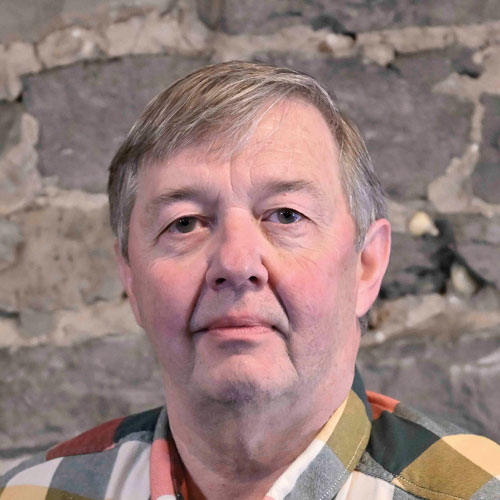
Terry Tinkess is a professional photographer, educator and journalist. He has been making a living with a camera and keyboard since 1999 and has been featured in such publications as The Ottawa Citizen, Cornwall Standard Freeholder, The Globe and Mail, The Miami Herald, Ottawa Construction News, The Ontario Construction Report, Ontario Home Builder Magazine, Reed Construction Data, Canadian Potato Business and most recently, The Record and Eastern Ontario AgriNews. Terry lives in Morrisburg, Ontario with his wife Brenda, Mia the anxious Pittie and cat Chubbers.